Big Man Tibial Plateau levelling Osteotomy (TPLO)
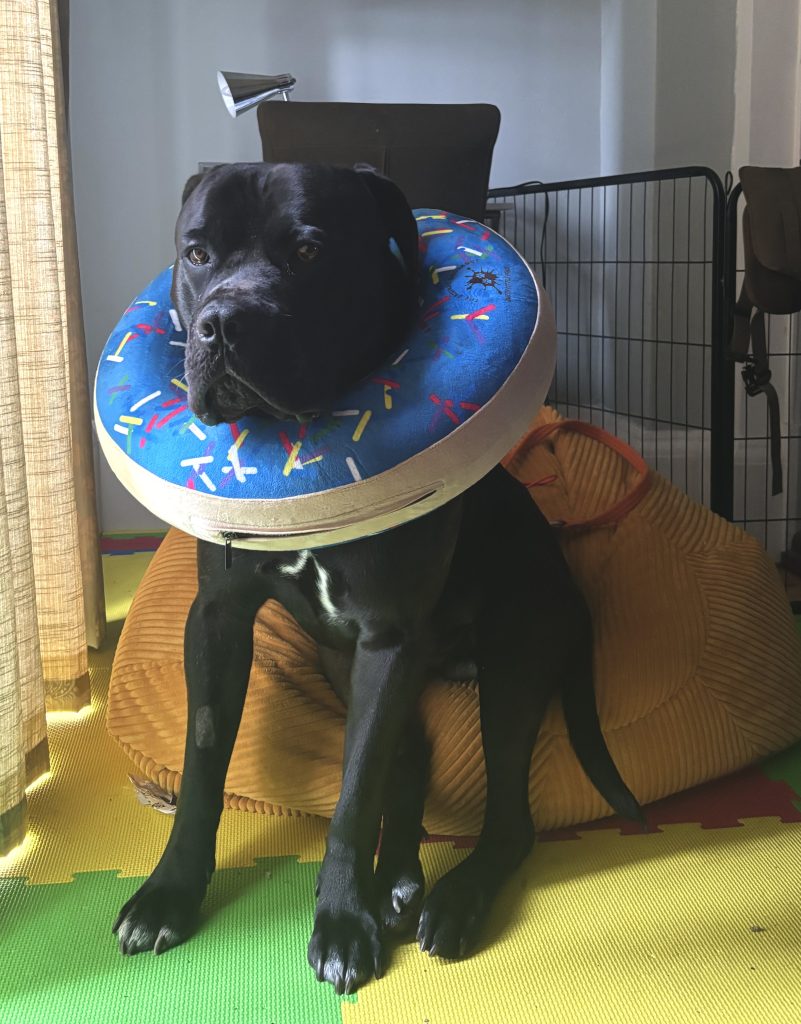
Meet our gentle giant 🐾
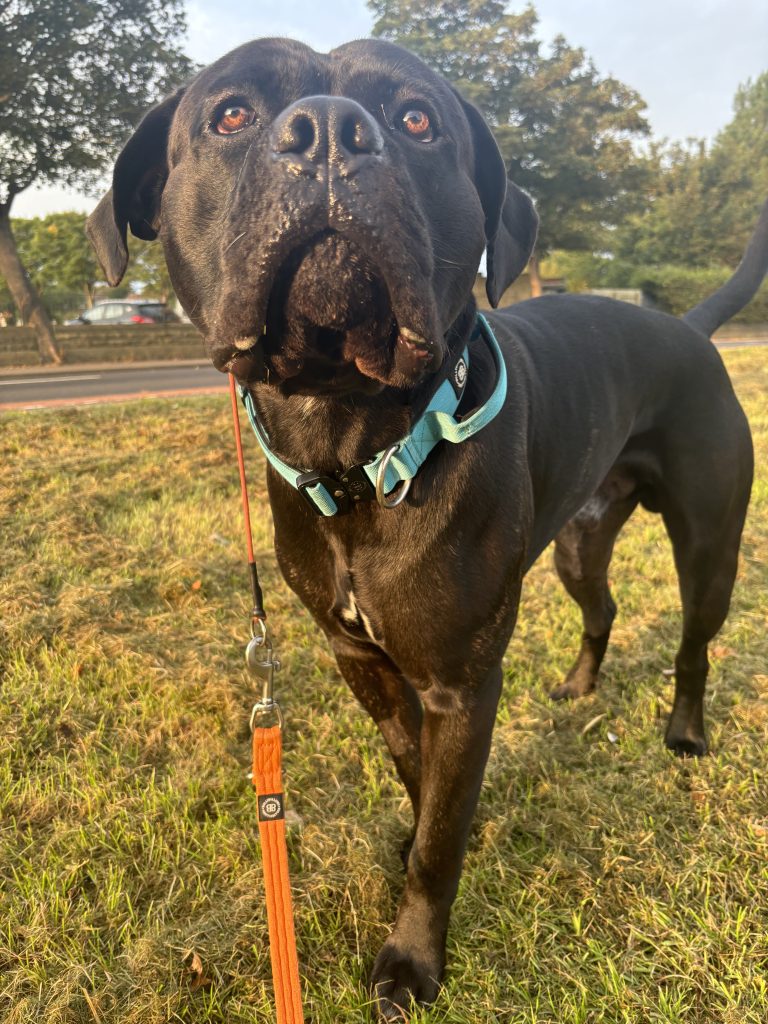
The Problem
He was sedated to allow a thorough examination of the joint and to obtain accurately positioned radiographs.
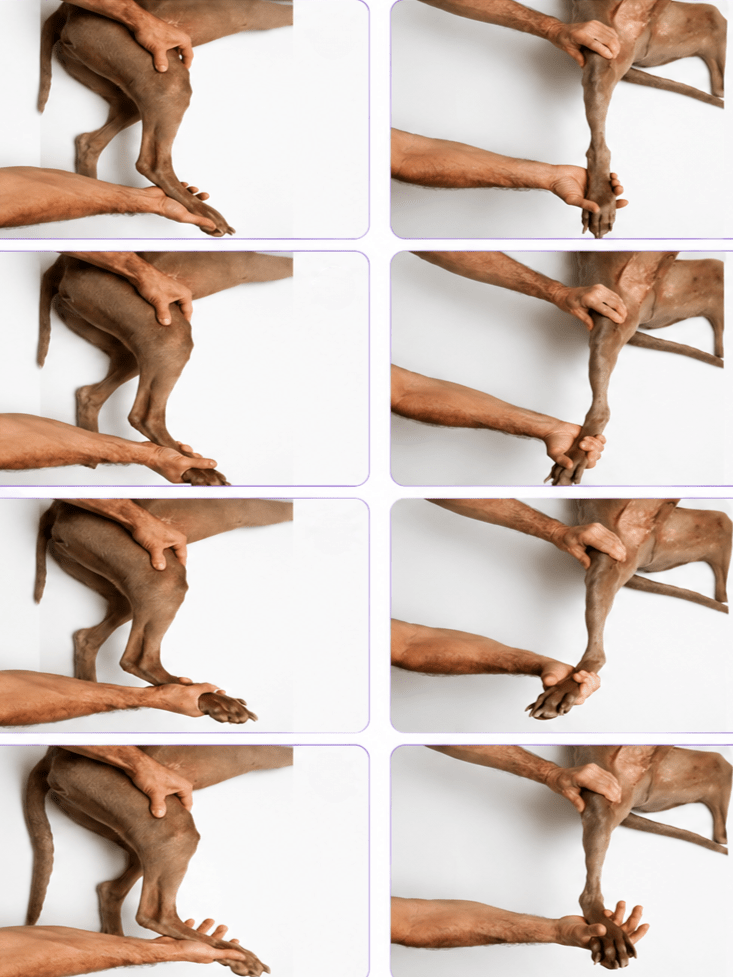
Checking the stability of the knee
With a cranial cruciate ligament injury, the knee can become unstable in several different directions. While he was relaxed under sedation, his knee was carefully examined using a series of specific tests.
Internal rotation
With him positioned on his back, the lower part of the leg was gently rotated inwards. Excessive internal rotation can indicate rotational instability within the knee — one of the movements normally controlled by an intact cranial cruciate ligament.
Cranial drawer
With him lying on his side, the femur was stabilised while the tibia was gently moved forwards. In a stable knee there should be very little movement. With a ruptured cranial cruciate ligament, the tibia can slide forwards relative to the femur — known as cranial drawer. The test can be performed with the knee in both flexion and extension.
Tibial thrust
The knee was stabilised while the hock (ankle) was flexed. In an unstable cruciate-deficient knee, this causes the tibia to move forwards relative to the femur. This mimics some of the forces acting through the knee when the dog bears weight.
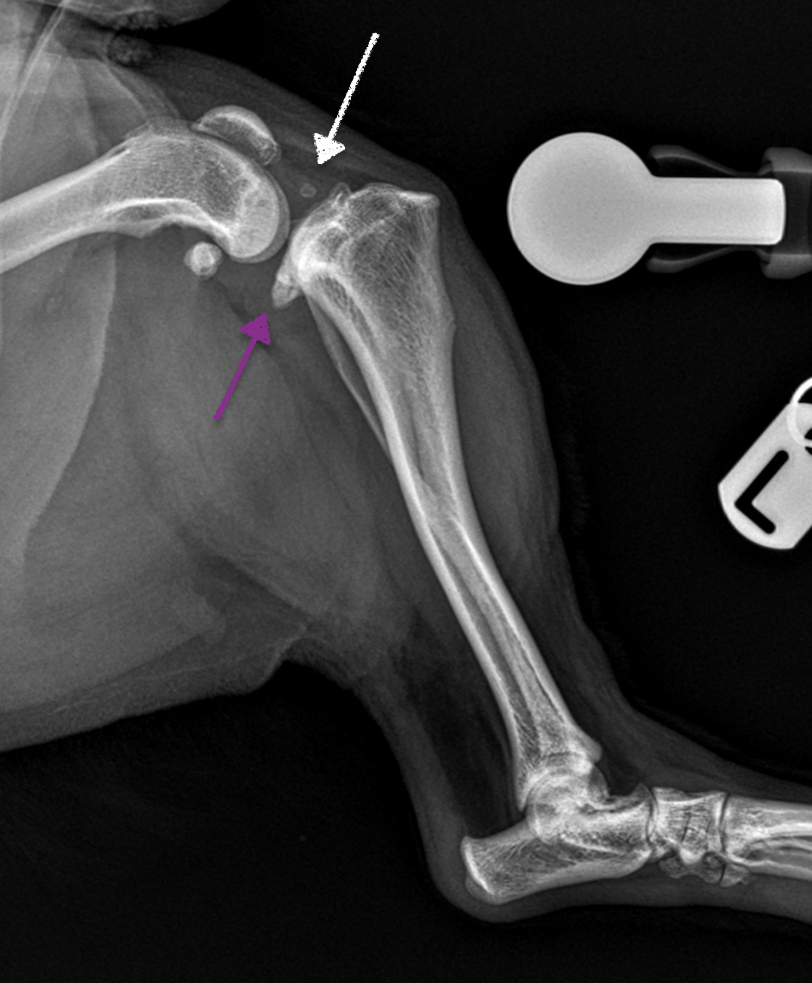
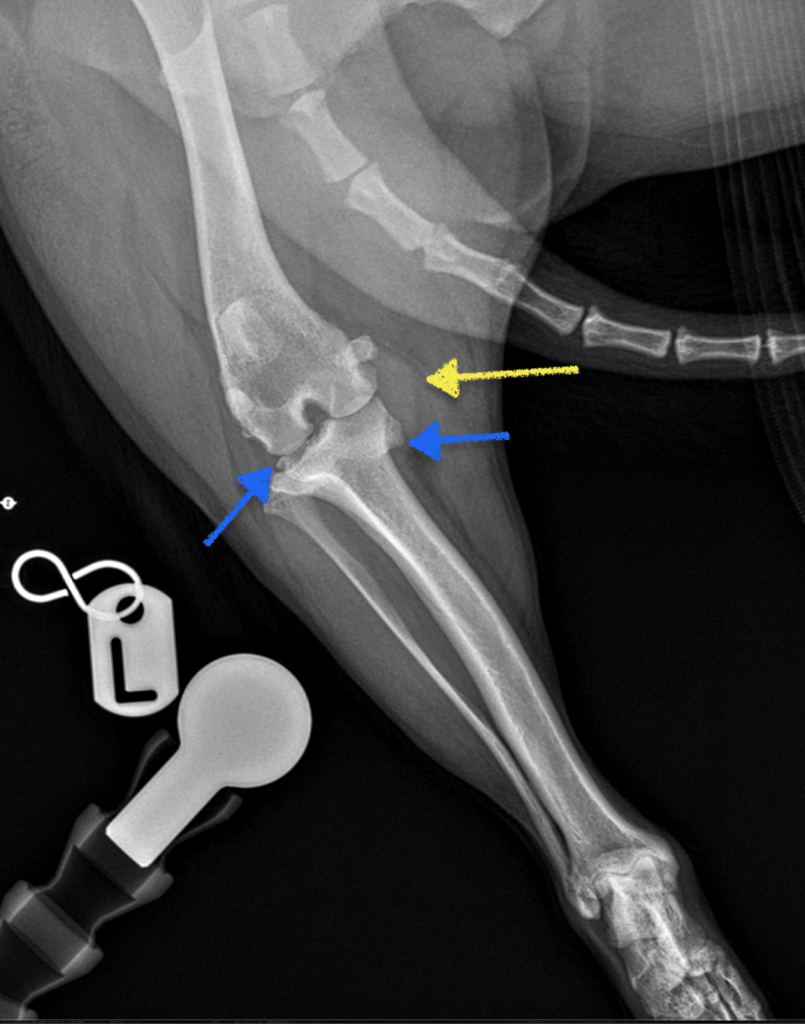
The Xrays demonstrated several changes within the right stifle:
- Joint effusion – an increased amount of fluid within the joint, indicating inflammation.
- Cranial displacement of the tibia – the shin bone was sitting further forwards than it should in relation to the femur.
- Early osteoarthritis – mild new bone formation was already developing around the joint.
Together with the clinical examination, these findings were consistent with damage to the cranial cruciate ligament (CCL).
Surgical Planning
Planning his surgery
For a dog weighing 60 kg, restoring stability to the knee was particularly important because of the considerable forces passing through the joint during normal activity.
Rather than attempting to replace the damaged ligament itself, surgery can alter the biomechanics of the knee so that the joint remains stable during weight bearing without relying on an intact cranial cruciate ligament.
Surgical Treatment
Because of his size and the degree of instability within the knee, a tibial plateau levelling osteotomy (TPLO) was performed.
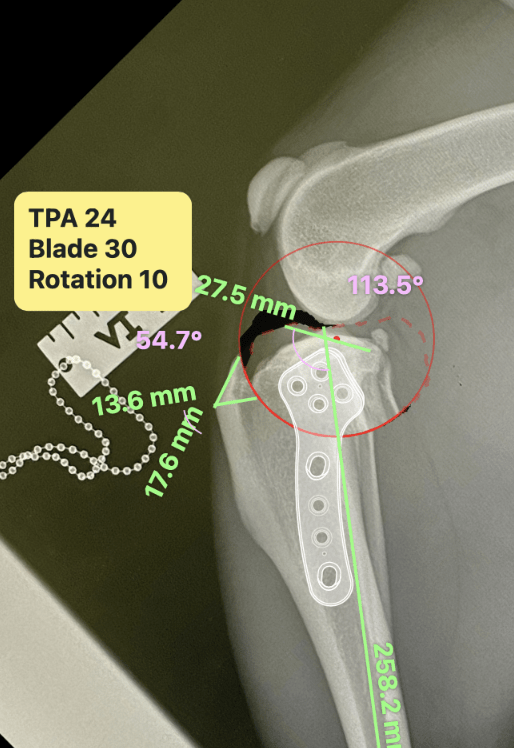
Before surgery, measurements were taken from his radiographs to plan the procedure specifically for his knee. His tibial plateau angle (TPA) measured 24°. This angle contributes to the forward movement of the tibia — known as tibial thrust — when a dog with a damaged cranial cruciate ligament bears weight.
The aim of TPLO surgery is to change this angle and alter the forces acting through the knee, creating a more stable joint without relying on the damaged ligament.
During surgery, a 30 mm curved cut was made through the upper part of the tibia using a specialist oscillating saw. The tibial plateau was then rotated by 10 mm to achieve the angle calculated during surgical planning.
Once the desired position had been achieved, the bone was stabilised using a 3.5 mm broad TPLO plate, secured with a combination of locking and compression screws to provide strong, rigid fixation while the osteotomy healed.
After the surgery
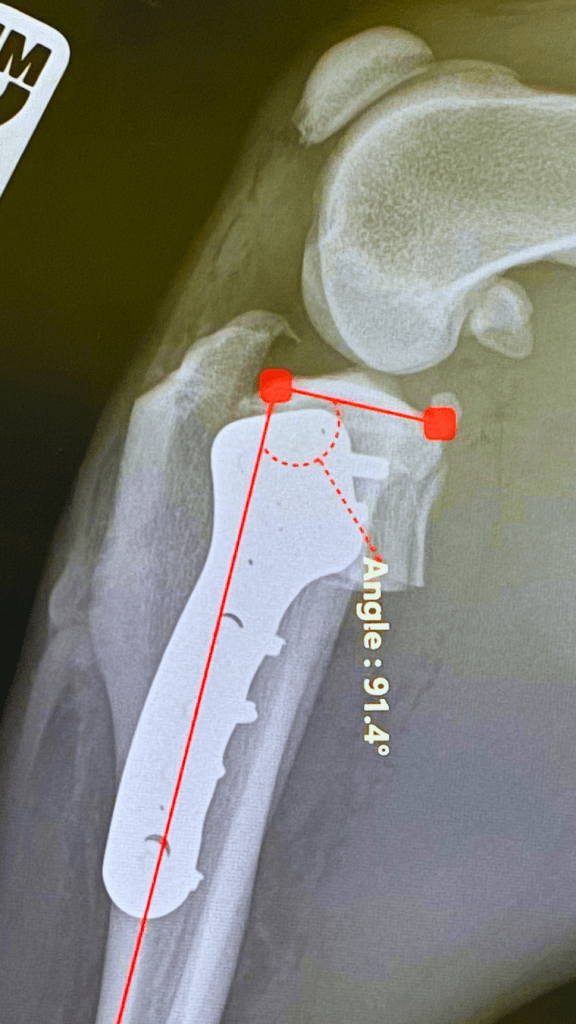
Post-operative X-rays were taken to check the position of the implants, alignment of the tibia and final tibial plateau angle.
His TPA had been reduced from 24° before surgery to 2° afterwards, placing it within the desired postoperative range of approximately 0–5°.
He recovered really well following his TPLO surgery and was soon much more comfortable on his operated leg.
Summary
Although dogs often start using the leg surprisingly quickly after TPLO, the bone still needs time to heal. Recovery therefore takes approximately 12 weeks, with carefully controlled exercise during this period to protect the surgical repair.
Exercise is gradually increased as healing progresses, with follow-up examinations and X-rays used to assess the osteotomy before returning to unrestricted activity.
For a 60 kg gentle giant, keeping things quiet for 12 weeks was no small task — but it was worth the wait! With his knee stable and his tibia healed, he could gradually get back to enjoying his normal adventures.🐾
Advanced Surgical support for Veterinary Practices in Durham, Stockton on Tees, Northallerton, and Darlington.
Contact us to discuss your cases.